Fire Protection Considerations for Medical and Healthcare Facilities in Lawrenceville, GA
Medical facilities have fire protection challenges that ordinary offices do not. Patients may have limited mobility, treatment areas can contain specialized equipment, and even a short disruption can interfere with patient care. For healthcare properties in Lawrenceville, GA, fire and life safety planning should account for the building, its occupancy, its systems, and the people who depend on them.
Fire protection for a medical or healthcare facility should include properly maintained detection, alarm, suppression, extinguishing, egress, and emergency-access provisions appropriate to the specific occupancy. Local requirements also matter because Gwinnett County conducts commercial fire compliance inspections and applies fire and life safety requirements according to occupancy type.
What local healthcare property teams should know
-
Fire protection requirements can differ between a hospital, outpatient clinic, medical office, assisted-care environment, and other healthcare-related occupancies.
-
Gwinnett County’s Fire Marshal conducts compliance inspections of existing commercial buildings and considers occupancy-specific conditions during those inspections.
-
Fire department access deserves particular attention because Gwinnett County guidance specifically identifies health care occupancies in its fire-lane requirements.
-
Documentation and routine maintenance matter because inspectors may review records associated with installed fire protection systems.
-
Renovations, changes in use, additions, and new equipment can affect fire protection needs and should be evaluated before assuming an existing system remains appropriate.
Why Fire Protection Matters for Healthcare Facilities in Lawrenceville
Fire protection matters in healthcare facilities because occupants may not always be able to evacuate as quickly or independently as people in a typical commercial building. Medical operations can also involve treatment rooms, electrical equipment, oxygen or other regulated materials, patient sleeping areas, kitchens, laboratories, and spaces with different life-safety needs under one roof.
The local healthcare environment includes everything from large campuses such as Northside Hospital Gwinnett near Medical Center Boulevard to smaller practices along Duluth Highway, Sugarloaf Parkway, and other commercial corridors throughout Gwinnett County.
AAA Fire Protection Resources, Inc. can be part of the fire protection planning conversation for area facilities. We encourage property owners and facility managers to view fire protection as an ongoing building-management responsibility rather than something addressed only before an inspection.
Local Fire Inspection and Compliance Considerations
Gwinnett County requires commercial occupancies to maintain applicable fire and life safety provisions, and its Fire Marshal’s Office conducts inspections based on factors including occupancy, risk, state mandates, historical information, and requests from businesses. Requirements are not identical for every property, so a healthcare facility should be evaluated according to its actual use and configuration.
Gwinnett County’s published Fire Maintenance Inspection guidance includes items such as fire sprinkler test documentation where sprinkler systems are installed. The county also makes clear that its general inspection checklist is not exhaustive and that additional requirements may apply depending on the occupancy.
For facilities undergoing construction, tenant improvements, or other permitted work, fire plan review and final inspection requirements may also enter the process.
How Fire Protection Problems Can Affect Local Healthcare Operations
Fire protection deficiencies can affect healthcare operations through safety risks, failed inspections, service interruptions, restricted building use, or unplanned repair work. In a facility that treats patients throughout the day, addressing deficiencies under emergency conditions can be substantially more disruptive than identifying them during planned inspections and maintenance.
This is especially relevant for busy medical properties serving Lawrenceville and surrounding Gwinnett communities. Patient appointments, employee schedules, deliveries, procedures, and access routes can all be affected when building work must be performed unexpectedly.
Warning Signs Healthcare Facility Managers Should Watch For
Warning signs should be addressed before they develop into larger fire protection or compliance concerns. Facility managers should pay attention to conditions that suggest a system, device, access route, or life-safety feature needs professional evaluation.
-
A fire alarm control panel displays a trouble, supervisory, or other abnormal condition.
-
Sprinkler heads are damaged, painted, obstructed, or surrounded by storage that may interfere with discharge.
-
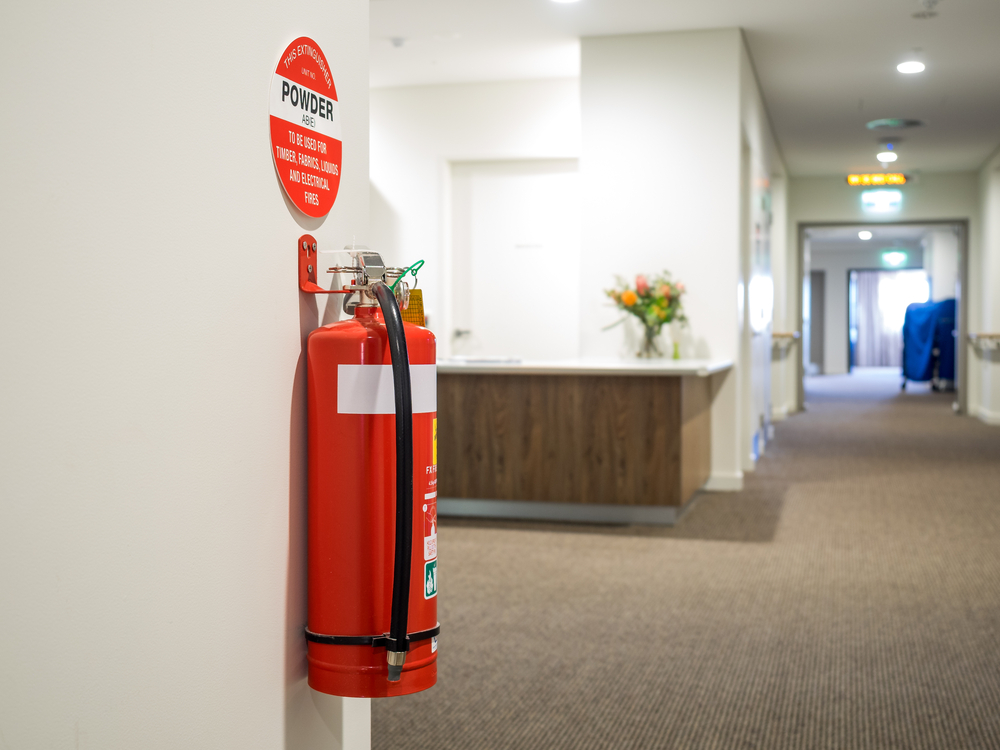
Portable fire extinguishers are missing, blocked, damaged, or showing signs that service may be due.
-
Exit doors, corridors, or designated egress paths are obstructed.
-
Fire doors are propped open or do not close as intended.
-
Renovations or new walls have changed the original room layout around existing protection equipment.
-
Fire department connections, hydrant areas, or designated fire lanes are obstructed.
-
Required inspection, testing, or service documentation cannot be located.
When a Healthcare Facility Should Call a Fire Protection Professional
A healthcare facility should call a qualified fire protection professional when installed equipment shows abnormal conditions, required service is due, renovations could affect system coverage, an inspection identifies deficiencies, or staff cannot confirm that fire protection components remain appropriate for the building’s current use.
Staff can routinely check for obvious obstructions, damaged equipment, blocked exits, and visible panel alerts. Testing, repair, alteration, system design, and other regulated work should be handled by the appropriate professionals rather than treated as a do-it-yourself maintenance task.
For a medical property in Lawrenceville, early coordination can also help reduce conflicts between fire protection work and patient schedules.
Common Fire Protection Concerns in Local Medical Buildings
Common fire protection concerns include aging equipment, changes to the floor plan, obstructed protection devices, incomplete maintenance records, and building uses that have evolved since the original system was installed. These conditions can develop gradually, particularly in medical offices that expand, remodel, or add specialized treatment spaces.
A suite originally designed for general office use may later contain examination rooms, imaging equipment, treatment areas, storage, or other uses that change how the space functions.
Older commercial properties near Downtown Lawrenceville may present different conditions from newly developed medical offices around major Gwinnett County corridors. The age of a building alone does not determine compliance, but changes made over time deserve careful review.
Prevention and Fire Protection Maintenance
Preventive fire protection maintenance should combine routine staff observations with scheduled professional inspection, testing, and service appropriate to each installed system. The goal is to find deficiencies while they can still be addressed in a controlled manner instead of discovering them during an inspection or emergency.
Healthcare facility managers can help by keeping exits clear, protecting access to extinguishers and fire protection equipment, monitoring visible system conditions, maintaining service records, and reviewing fire protection implications before renovations begin.
A practical time to review documentation is before planned construction, equipment replacement, tenant improvements, or major changes in how rooms are used.
What to Expect From Professional Fire Protection Service
Professional fire protection service should give facility managers a clearer understanding of system condition, identified deficiencies, required maintenance, and potential next steps. The exact work depends on the systems installed, the occupancy, the building configuration, and applicable requirements.
For a Lawrenceville healthcare property, the result may involve routine inspection or maintenance, correction of a specific deficiency, further evaluation of an existing system, or coordination associated with a renovation.
Facility teams should expect findings to be specific to the property rather than assume every medical office or healthcare building requires the same solution.
Common Fire Protection Mistakes in Healthcare Facilities
The most common mistakes happen when fire protection is treated as a one-time compliance task instead of an ongoing part of facility management.
Mistake: Blocking equipment with temporary storage.
Consequence: Access or system performance can be compromised.
Better approach: Include fire protection clearances and exit routes in routine housekeeping checks.
Mistake: Waiting for an inspection to identify maintenance problems.
Consequence: Corrective work may become more disruptive.
Better approach: Track recurring inspection, testing, and maintenance requirements.
Mistake: Remodeling without reviewing fire protection.
Consequence: New walls, ceilings, or room uses may affect existing protection.
Better approach: Include fire protection review early in renovation planning.
Mistake: Assuming a medical office is regulated exactly like every other commercial space.
Consequence: Occupancy-specific considerations can be overlooked.
Better approach: Confirm requirements for the facility’s actual use.
A Common Local Healthcare Facility Scenario
A common local scenario is a medical practice that has occupied the same Gwinnett County building for years but has gradually changed its interior space. Examination rooms are added, storage increases, equipment changes, and a former office becomes a clinical area while the existing fire protection arrangement receives little attention.
Before another renovation, the facility manager reviews the fire protection equipment and discovers that the current layout should be evaluated rather than assuming the original arrangement still fits the space.
That is not a case study or a claim about a specific property. It illustrates why periodic review can be useful as healthcare facilities evolve.
Fire Protection Solutions for Medical and Healthcare Properties
Fire protection solutions should be matched to the building’s installed systems, occupancy, identified deficiencies, and planned changes. Depending on the property, relevant needs may involve fire extinguishers, fire alarm components, sprinkler-related equipment, system inspection or maintenance, or other fire protection services appropriate to the facility.
Our goal is to help local property teams identify the appropriate next step without recommending unnecessary work.
Comparing Routine Maintenance With Reactive Service
Routine maintenance generally gives healthcare facility managers more control over scheduling, documentation, and corrective work, while reactive service occurs after a problem, deficiency, or system condition has already appeared. For facilities with patients and tightly managed clinical schedules, planned service is usually easier to coordinate operationally.
Routine staff checks do not replace required professional service. They complement it by helping facility teams notice obvious problems between scheduled visits.
If a panel condition, damaged device, overdue service requirement, or inspection deficiency is already present, professional evaluation should not be postponed simply to keep the facility on its normal maintenance cycle.
Healthcare Fire Protection Service Areas Around Lawrenceville
Healthcare properties in Lawrenceville are part of a broader Gwinnett County medical and commercial network that includes nearby Duluth, Suwanee, Snellville, and Lilburn. Facilities throughout the area range from major hospital campuses to independent physician practices, outpatient centers, dental offices, specialty clinics, and other patient-care environments.
Fire protection planning should still be based on each property’s jurisdiction, occupancy, and installed systems rather than its proximity to another facility.
The Cost of Ignoring Fire Protection Deficiencies
Ignoring a fire protection deficiency can increase the risk of a larger repair, inspection complications, operational disruption, or reduced system readiness. In a healthcare setting, those consequences can extend beyond the building itself because patients, employees, appointments, and clinical operations may all depend on continued access to the facility.
Addressing visible problems early gives a property team more opportunity to schedule service around normal operations and understand what corrective work is actually needed.
Frequently Asked Questions About Healthcare Fire Protection in Lawrenceville
Do healthcare facilities in Lawrenceville have different fire protection requirements than normal offices?
They can. Fire and life safety requirements depend on factors including occupancy classification, building use, construction, systems, and the people occupying the space. A small medical office may present different requirements from a hospital or another healthcare occupancy, so property-specific review is more reliable than applying general office guidance.
Who handles commercial fire inspections in Lawrenceville and Gwinnett County?
Gwinnett County’s Community Risk Reduction Division and Office of the Fire Marshal handle commercial fire compliance inspections and related fire prevention functions within their jurisdiction. The county states that inspection frequency and requirements can vary based on occupancy, risk, state mandates, historical information, and other relevant factors.
Are fire lanes especially important for healthcare properties in Gwinnett County?
Yes. Gwinnett County guidance specifically includes health care occupancies among the situations addressed by its requirements for fire department access and designated fire lanes. Facility managers should keep required access areas unobstructed and avoid allowing parking, deliveries, or temporary storage to interfere with emergency vehicle access.
Should a medical office review fire protection before remodeling?
Yes. A medical office should consider fire protection before walls, ceilings, room uses, or equipment layouts change. Renovations can affect alarm devices, sprinkler coverage, exits, fire-rated construction, and other life-safety features. Early review can help identify necessary work before the renovation reaches its final stages.
What fire protection records should a Lawrenceville healthcare facility keep?
A healthcare facility should retain the inspection, testing, maintenance, and service records required for the systems installed at the property. Gwinnett County’s published inspection guidance specifically notes sprinkler test documentation where applicable. The exact records needed should be confirmed according to the facility and its equipment.
Can employees perform their own fire protection inspections?
Employees can perform useful visual checks, but staff observations should not replace required professional inspection, testing, or maintenance. Employees can look for blocked exits, obstructed equipment, visible damage, or abnormal panel conditions. Work requiring specialized testing, repair, alteration, or technical judgment should be referred to qualified professionals.
How often should a Lawrenceville medical facility review its fire protection systems?
The appropriate frequency depends on the equipment, applicable requirements, manufacturer instructions, occupancy, and type of inspection or maintenance involved. Rather than using one schedule for every system, facility managers should maintain a calendar based on the specific fire protection equipment installed at their Lawrenceville property.
What should a facility do after a Gwinnett County fire inspection identifies a deficiency?
The facility should review the cited deficiency, determine what qualified service or corrective action is required, document the completed work, and follow any instructions provided by the authority having jurisdiction. Prompt action can make it easier to resolve the issue while minimizing interference with patients and normal operations.
Protect Your Healthcare Facility With a Proactive Fire Protection Plan
A proactive fire protection plan helps Lawrenceville healthcare property teams manage safety responsibilities, maintenance needs, and facility changes before they become disruptive problems. We can help you evaluate the next appropriate step for your property based on its systems and current needs.
Categorised in: Fire Protection System
This post was written by admin